Choosing Your Gluten-Free Flour for Sourdough Starters
Note: Due to the Tables this is much easier to view/read on larger screens
Choosing the right gluten-free flour is the first step to making your sourdough starter. In the gluten-free world, flour can each have very different properties which will yield very different results. Whole grains are usually best, since they contain the wild yeast necessary to bake your bread. Nut flour has a very low amount of wild yeast, if any, and is more difficult to establish, so we will not be discussing those here. Potato flakes are another possibility, but that will be covered in another post. And contrary to popular belief, starches and gums will not harm your starter – so flour blends such as Bob’s Red Mill 1 to 1 are also a great possibility. So how do you choose what to use for yours?
The very first step will be deciding what factors are most important to you. Ask yourself these questions:
- Aside from gluten do you need to avoid rice, corn, oats?
- Are you experienced and patient enough to work with the slower fermenting flours?
- Is nutritional content important?
- What flavor profile are you looking for? More or less sour?
- What flours are readily available and affordable for you?
Now review these key factors and refer to the tables below:
1. Fermentation Properties
- Rice Flour: Brown rice flour is a popular choice for gluten-free sourdough starters because it ferments well and has a neutral flavor. White rice flour can also be used but may have less nutritional value.
- Sorghum Flour: Sorghum flour is another excellent option due to its mild flavor and good fermentation properties.
- Millet Flour: Millet flour works well and adds a slightly sweet flavor to the starter.
- Buckwheat Flour: Buckwheat ferments well and imparts a strong, earthy flavor. It may be best combined with other flours.
2. Nutritional Content
- Teff Flour: Teff is nutrient-dense and can add a robust flavor to your starter. It ferments well but can be strong-tasting.
- Amaranth Flour: Amaranth is highly nutritious and ferments well, although it has a distinctive taste that may not be to everyone’s liking.
3. Flavor Profile
- Consider the flavor you want in your final sourdough bread.
- Neutral flours like brown rice and sorghum are versatile, while teff, buckwheat, and amaranth can add unique flavors.
4. Texture and Consistency
- Some gluten-free flours can produce a heavier or denser texture.
- Combining different flours can help achieve a more balanced texture. For example, mixing rice flour with sorghum flour can provide a good balance of fermentation and flavor.
5. Allergy and Dietary Restrictions
- Ensure the flour you choose does not contain any allergens or ingredients you need to avoid.
- Always check for cross-contamination if you are highly sensitive to gluten.
6. Availability and Cost
- Some gluten-free flours can be more expensive or harder to find than others.
- Choose a flour that is accessible and fits your budget.
Characteristics of common GF flours for sourdough starters
Note: I have not tried all these flours. This is based on research and notes from those who have.
| Flour | Fermentation Properties | Flavor | Texture | Notes |
|---|---|---|---|---|
| Brown Rice | Ferments well | Neutral | Smooth and light | Higher nutritional content than white rice. |
| White Rice | Ferments well | Neutral | Smooth and light | Less nutritious than brown rice. |
| Sorghum | Ferments well | Mild, slightly sweet | Light and soft | Great for a balanced starter. |
| Millet | Ferments well | Mildly sweet, nutty | Slightly coarse | Can be used alone or mixed with other flours. |
| Buckwheat | Ferments well | Earthy, robust | Coarse and dense | Best mixed with other flours to balance flavor. |
| Teff | Ferments well | Nutty, slightly sweet | Fine but dense | Adds unique flavor and is nutrient-dense. |
| Amaranth | Ferments well | Earthy, nutty | Fine and dense | Use in small quantities due to strong flavor. |
| Quinoa | Ferments well | Nutty, slightly bitter | Fine | Best used in combination with other flours. |
| Oat (Gluten-Free) | Ferments well | Mildly sweet | Smooth and soft | Ensure it is certified gluten-free. |
| Almond | Limited fermentation | Nutty, slightly sweet | Coarse and moist | Best used in combination with other flours. |
| Coconut | Absorbs moisture | Sweet, coconutty | Very fine and dry | Use sparingly, mix with other flours. |
| Chickpea | Ferments well | Earthy, slightly bitter | Fine and dense | Use in small quantities or mixed with milder flours. |
| Tapioca | Limited fermentation | Neutral | Very fine and light | Best used in combination with other flours. |
| Corn | Ferments moderately well | Slightly sweet, earthy | Fine, slightly gritty | Best used in combination with other flours. |
| Potato Flakes | Limited fermentation | Mild, slightly sweet | Light and fluffy | Adds moisture and a soft texture, best used in combination. |
Gluten-Free Flours for a Traditional Sour Flavor
| Flour | Fermentation Properties | Flavor | Texture | Notes |
|---|---|---|---|---|
| Brown Rice | Ferments well | Neutral | Smooth and light | Good foundation for fermentation. |
| Sorghum | Ferments well | Mild, slightly sweet | Light and soft | Balances sourness with mild sweetness. |
| Buckwheat | Ferments well | Earthy, robust | Coarse and dense | Adds depth and complexity to the sour flavor. |
| Teff | Ferments well | Nutty, slightly sweet | Fine but dense | Enhances sourness with a unique flavor profile. |
| Amaranth | Ferments well | Earthy, nutty | Fine and dense | Strong flavor that contributes to sourness. |
| Quinoa | Ferments well | Nutty, slightly bitter | Fine | Adds a slight bitterness that can enhance sourness. |
This information and tables should help you choose the right gluten-free flour for your sourdough starter based on your preferences and needs. Although I have not tried all of these flours myself, please feel free to contact me if you have any questions.
Blending Gluten-Free Flours for Unique and Enhanced Flavors
It is also possible to blend flours. Blending flours can aid with fermentation properties (adding high fermentation grain to low fermentation grains), increase nutritional values, and create unique flavor profiles.
Some general blends for to achieve different fermentation, flavor and texture properties:
| Combination | Proportions | Benefits |
|---|---|---|
| Brown Rice and Sorghum | 50% brown rice flour, 50% sorghum flour | Balanced fermentation, mild flavor, good texture. |
| Brown Rice, Sorghum, Millet | 40% brown rice flour, 40% sorghum flour, 20% millet flour | Mildly sweet flavor, good fermentation, slightly varied texture. |
| Sorghum and Buckwheat | 70% sorghum flour, 30% buckwheat flour | Robust flavor, strong fermentation, good texture. |
| Teff and Amaranth | 50% teff flour, 50% amaranth flour | Highly nutritious, unique flavor, good fermentation properties. |
To add a unique flavor to your sourdough you can use corn flour. It is important to remember that corn can ferment, but not as vigorously as others might. You will probably want to add it to a grain that has strong fermentation properties, like brown rice. It does add a distinctive, slightly sweet and earthy flavor to your starter and breads. This can be wonderful in some recipes, not so much in others, so you might want to create a separate starter with it. It also has a slightly grittier texture that results in a denser loaf. Hydration may need to be adjusted to maintain the proper consistency since it tends to absorb less water.
This table shows some possible blends when trying corn flour. You can mix up the percentages based on the above notes to get the desired flavor and texture:
| Combination | Proportions | Benefits |
|---|---|---|
| Corn and Brown Rice | 50% corn flour, 50% brown rice flour | Balanced fermentation, improved texture, mild and slightly sweet flavor. |
| Corn, Sorghum, and Millet | 30% corn flour, 40% sorghum flour, 30% millet flour | Good fermentation, varied texture, mildly sweet and nutty flavor. |
Another unusual ingredient for sourdough starters is potato flakes. Potato flakes to not ferment as actively as most other flours, but is a great option for those who have allergies to other grains. It is best to add other grains with higher fermenting properties to assure a strong starter.
Sample blends using potato flour:
| Combination | Proportions | Benefits |
|---|---|---|
| Brown Rice and Potato Flakes | 70% brown rice flour, 30% potato flakes | Balanced fermentation, improved moisture, mild flavor. |
| Sorghum, Potato Flakes, and Millet | 40% sorghum flour, 30% potato flakes, 30% millet flour | Good fermentation, varied texture, slightly sweet and nutty flavor. |
Blends to increase the sourness of your starter:
| Combination | Proportions | Benefits |
|---|---|---|
| Brown Rice and Buckwheat | 50% brown rice flour, 50% buckwheat flour | Balanced fermentation, robust sour flavor. |
| Sorghum and Teff | 60% sorghum flour, 40% teff flour | Good fermentation, unique and enhanced sour flavor. |
| Brown Rice, Sorghum, and Amaranth | 40% brown rice flour, 40% sorghum flour, 20% amaranth flour | Balanced sourness with depth and complexity. |
Now that you have seen some examples of possible blends, you can also choose to make up your own!
Comparing Popular Gluten-Free Flour Blends
When it comes to gluten-free baking, choosing the right flour can feel like a very intimidating task. Each one is so very different, and standing there in the aisle it can be difficult to really compare. When I first eliminated gluten-free it was one of the most frustrating experiences – spending so much money on high priced flour that just tasted horrible, was gritty, or worked for one type of food but not another. It was the main reason that I gave up baking for several years. I just could not seem to figure them out. But when my husband brought home the Caputo Fioreglut I was shocked – not only did it work, it tasted amazing! This led me to start researching other flours, and finally learning how the different flours, starches and blends work together.
I never really documented what I learned until I started making the sourdough. As people in my group asked about various flours I looked them up and tried to compile somewhat of a comparison list. Hoping to help save someone else a little bit of headache – although it is still a lot of info, it is so much easier to understand the differences when I see it side by side. My own experience with most of these flour blend brands is limited, so notes on texture and flavor are from comments that I have read from others and from their websites. Those marked with ** are flours I use and am familiar with, notes on texture and flavor are my own. For anyone reading this, I would love to get your thoughts on the texture and flavor of any of these flours, or of others not listed here, so feel free to leave a comment.
Comparison of Commonly Found Gluten-Free Flour Blends:
These are flours that are most commonly mentioned in my Gluten-Free Sourdough Baking group in Facebook.
| Flour Brand | Type | Ingredients | Texture | Flavor | Nutritional Profile | Versatility | Gum Content | Dietary Needs | Other Factors to Consider | Certified Gluten-Free |
|---|---|---|---|---|---|---|---|---|---|---|
| Bob’s Red Mill Gluten-Free** | All-Purpose | Garbanzo bean flour, potato starch, tapioca flour, whole grain sorghum flour, fava bean flour | Varies but usually slightly grainy | Neutral, slight bean flavor | Provides protein and fiber | Versatile for various baked goods (including yeast breads) | May contain xanthan gum or guar gum | Gluten-Free, Vegetarian, Kosher, Non-GMO | Non-GMO, might be ok for yeast baking | Yes – GFCO plus self testing (ELISA) of all incoming products & throughout the mfg process |
| King Arthur Gluten-Free | All-Purpose | Specialty flour blend (rice flour, tapioca starch), potato starch, whole grain brown rice flour, vitamin and mineral blend [calcium carbonate, niacinamide (vitamin b3), reduced iron, thiamin hydrochloride (vitamin b1), riboflavin (vitamin b2) | Smooth | Balanced | Contains some whole grains | Suitable for bread, cakes, and cookies | Contains added vitamins and minerals | Gluten-Free, Vegetarian, Kosher | Non-GMO, Might be ok for yeast baking. Shared equipment with possible allergens but clean thoroughly to avoid cross contamination as much as possible (but do not 100% guarantee) | Yes |
| Pamela’s Products Gluten-Free | Cup for Cup | Brown rice flour, tapioca starch, white rice flour, potato starch, sorghum flour, arrowroot starch, guar gum, sweet rice flour, rice bran | Varies | Mild, Neutral | Balanced blend of flours | Versatile for baking and cooking | Contains guar gum | Gluten-Free, Vegetarian | Made in a peanut free facility, but equipment processes tree nuts, coconut, eggs and milk | Yes |
| Namaste Foods Gluten-Free Perfect Flour Blent | All-Purpose & Cup for Cup | Sorghum flour, brown rice flour, tapioca starch &/or arrowroot starch, white rice flour, flour, xanthan gum &/or guar gum | Varies | Neutral | Provides carbohydrates & whole grains, plant based | Versatile for various baked goods | Contains xanthan gum and/or guar gum | Gluten-Free, Vegetarian, Kosher | Non-GMO, free from top 14 food allergens | Yes |
| Better Batter Gluten-Free | All-Purpose | White rice flour, brown rice flour, tapioca starch, potato starch, potato flour, pectin (sucrose, pectin, citric acid), xanthan gum | Varies | Neutral | Provides carbohydrates | Suitable for a variety of recipes | Contains xanthan gum | Gluten-Free, Vegetarian, | Allergy friendly for top 9 allergens, mustard, and sesame | Yes |
| Cup4Cup Multipurpose Flour | Cup-for-Cup | Cornstarch, white rice flour, brown rice flour, rBST-free milk powder, tapioca flour, potato starch, xanthan gum | Fine, Silky | Neutral | Contains milk powder | Suitable for various recipes | Contains xanthan gum | Gluten-Free, Vegetarian | Individuals with dairy allergies, lactose intolerance, or milk protein sensitivity | Yes |
| Bob’s Red Mill Gluten-Free 1-to-1** | Cup-for-Cup | Sweet white rice flour, whole grain brown rice flour, potato starch, whole grain sorghum flour, tapioca flour, xanthan gum | Varies | Neutral | Provides carbohydrates | Versatile for various baked goods (not recommended for yeast baking) | Contains xanthan gum | Gluten-Free, Vegetarian, Kosher, Non-GMO | Non-GMO Certified | Yes – GFCO plus self testing (ELISA) of all incoming products & throughout the mfg process |
| King Arthur Gluten-Free Measure for Measure | Cup-for-Cup | Rice flour, whole grain brown rice flour, sorghum flour, tapioca starch, potato starch, cellulose, vitamin and mineral blend [calcium carbonate, niacinamide (vitamin b3), reduced iron, thiamin hydrochloride (vitamin b1), riboflavin (vitamin b2)], xanthan gum, cellulose gum | Fine, Silky | Balanced | Contains some whole grains | Suitable for various recipes | Contains xanthan gum | Gluten-Free, Vegetarian, | Not recommended for yeast baking, contains added minerals and vitamins. Shared equipment with possible allergens but clean thoroughly to avoid cross contamination as much as possible (but do not 100% guarantee) | Yes |
| Pamela’s Gluten-Free Bread Mix | Bread Flour | Sorghum flour, tapioca flour, white rice flour, sweet rice flour, brown rice flour, evaporated cane sugar, inulin, millet flour, honey, rice bran, sea salt, xanthan gum | Varies | Mild, slightly sweet | Provides carbohydrates | Ideal for breads and rolls (yeast baking) | Contains xanthan gum | Gluten-Free, Vegetarian, | Contains honey. | Yes |
| King Arthur Gluten-Free Bread Flour | Bread Flour | Gluten-Free Wheat Starch, Corn Starch, Cellulose and Psyllium Fiber Blend, Sorghum Flour, Pea Protein, Xanthan Gum, Enzymes | Varies | Neutral, may have a mild wheat flavor | Provides carbohydrates | Ideal for breads and rolls (yeast baking) | Contains xanthan gum and psyllium fiber | Gluten-Free, Vegetarian | Recommended for yeast baking. Uses added enzymes (fungal alpha-amylase) commonly used in flours and baking mixes | Yes |
| Caputo Fioreglut** | All-Purpose | Gluten-free wheat starch (meets FDA requirements), dextrose, maize starch (cornstarch), buckwheat flour, rice starch. Thickeners: guar gum, psyllium husk, flavoring | Smooth, silky – closely resembles wheat dough when wet, but is stickier | Neutral. Wheat starch does add a pleasant wheat flavor | Provides carbohydrates | Suitable for various recipes. Great for yeast baking | Contains guar gum, psyllium husk | Gluten-Free, Vegetarian, Kosher, Halal | Non-GMO. Individuals with wheat allergies should avoid. But gluten registers less than 20ppm (they claim less than 10ppm) | Yes – European, approved by the Italian Ministry for Health as gluten-free & safe for coeliacs |
I know this is a lot to take in, but it may help you narrow down which flours will more closely match your own dietary needs.
Click here to download this chart as a PDF for future reference.
Additional Notes:
- Wheat Starch: I cannot provide medical advice. This is simply a summary explaining what wheat starch is and the claims made on the companies websites. Please consult a doctor if you are at all unsure whether wheat starch is safe for you. Caputo and King Arthur Bread Flour both contain large amounts of de-glutenized wheat starch. This means that the gluten has been separated from the wheat. This practice has been used for many years in Europe, but is just now gaining ground in the US. Both facilities assure that the end result is well under the 20ppm to be considered gluten-free (meets FDA requirement). This means it is considered safe for most people with celiac or gluten sensitivity. It is NOT safe for anyone with a wheat or severe gluten allergy (if you cannot tolerate even a spec of gluten steer clear!). Again, if you are at all unsure please discuss this with your doctor to confirm it is safe for you to consume.
- Cup4Cup: Contains milk powder, so it may not be safe for anyone that must avoid dairy/lactose. I have read that it is considered safe to use in starters while they are being established in warm temperatures, even though it has milk. I am not so sure that I want to test that myself, but I included it here so that others are aware (many do not realize it has milk).
- Xanthan Gum and Psyllium Husk: These are binders and thickeners, used to help mimic some of the properties of gluten. Both can act as a laxative, so anyone with very sensitive digestive systems might want to use these sparingly. If recipes call for these specific flours AND xanthan or psyllium then it is probably needed for best results. If the recipe just notes any GF flour plus these ingredients you may want to lower the recipe amounts. I usually start with half.
- Psyllium Husk is completely natural, made from the husks of the seeds from the Plantago ovata – a shrub like herb. The seeds are When added as a separate ingredient, it can cause your baked goods to turn purple, although I have never had this happen when using a blend that includes it.
- Xanthan Gum is also natural, but undergoes more of a process to be created. It is made by fermenting glucose derived from corn, soy, dairy or wheat with strains of a specific bacteria. If you have severe allergies or sensitivities to any of those ingredients you may want to avoid anything with xanthan unless you can confirm which product the glucose came from.
- King Arthur Flours: King Arthur adds various minerals, vitamins, and enzymes to their flours. While this is not necessarily a bad thing, if you are looking for all natural ingredients without additives this might not be a brand for you.
Using a Pre-Blended Flour for Sourdough Starter
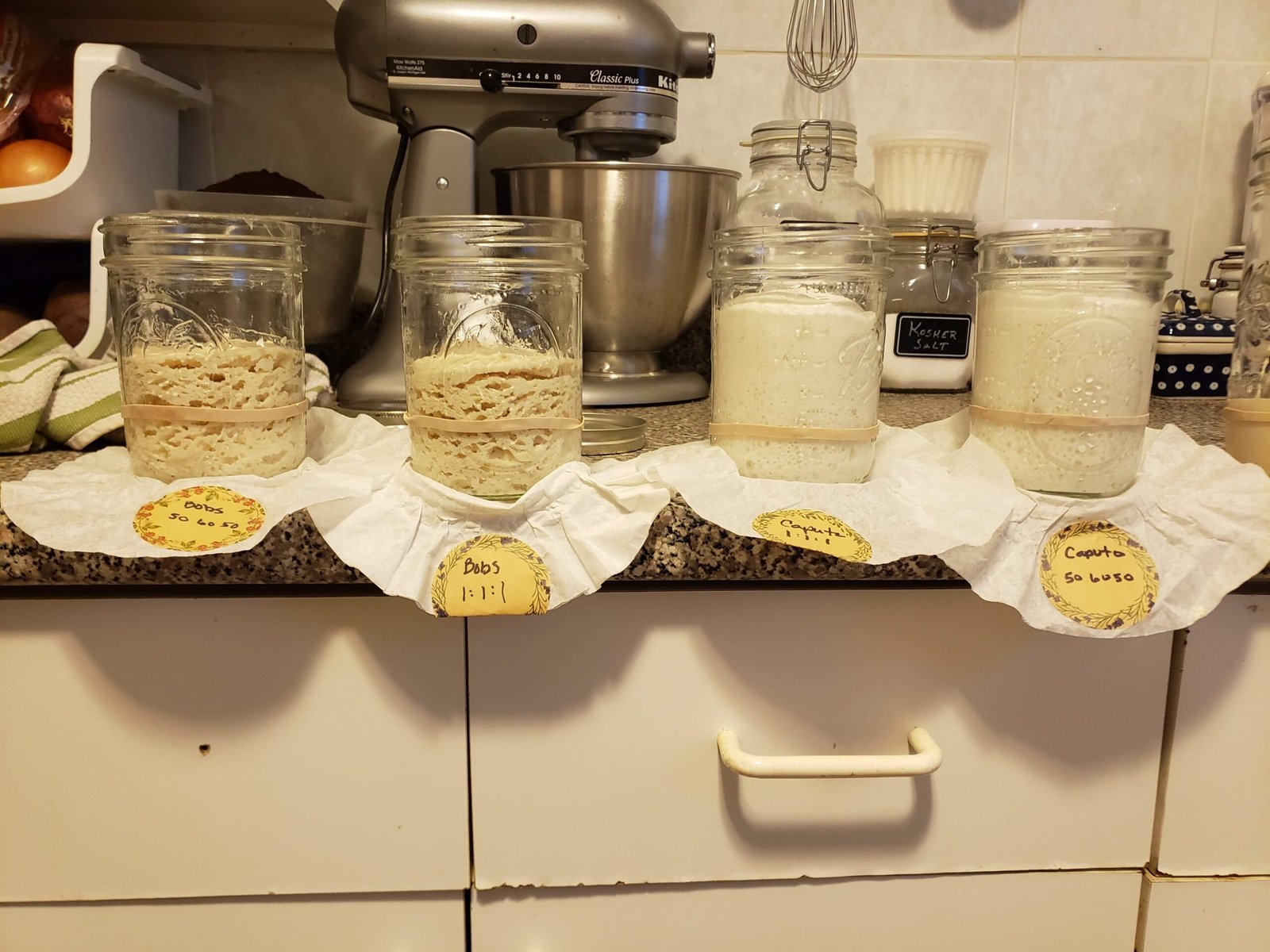
One of the most popular question is “can I use Bob’s 1:1 (or other brand) blend to make a sourdough starter”? This is something that you will find many differing views on. If you follow traditionalists, or wheat sourdough bakers who are not very familiar with gluten-free, you have probably heard that starches and gums are bad for a starter. This is FALSE. Many of us have made our first starters using what we had in our cupboard, and that includes these pre-blended flours. Just like the single flours, however, the various combinations can all have slightly different appearances, textures, consistencies and results.
The table below expands on the pre-blended flours data, narrowing which ones have properties that make them more likely to be successful sourdough starters. This is not a guarantee, just data I have compiled from various posts, sites, and mentions of user experiences. If you see a ** this means it is a flour I have personal experience with.
Please feel free to leave comments about your own experiences with these or other flour blends!
Pre-Blended Flours You Can Use in Sourdough Starters
| Flour Brand | Type | Fermentation Quality | Flavor | Probability of Success | Expected Rise of Starter | Expected Sourness | Additional Notes |
|---|---|---|---|---|---|---|---|
| Caputo Fioreglut** | All-Purpose | Excellent | Neutral | High | Strong rise | Mild | High-quality blend, excellent starter activity |
| King Arthur Gluten-Free Bread Flour** | Bread Flour | Excellent | Neutral | High | Strong rise | Mild | Excellent rise and structure for bread |
| King Arthur Gluten-Free All-Purpose** | All-Purpose | Consistent | Mild | High | Strong rise | Mild | Suitable for various baked goods |
| Pamela’s Products Gluten-Free Artisan Flour Blend | Cup-for-Cup | Strong | Mild, Neutral | High | Good rise | Mild | Easy to maintain |
| Bob’s Red Mill Gluten-Free All-Purpose** | All-Purpose | Good | Neutral | High | Good rise | Mild to Moderate | Provides good fermentation and flavor due to high protein content |
| King Arthur Gluten-Free Measure for Measure** | Cup-for-Cup | Reliable | Balanced | High | Good rise | Mild | Suitable for consistent results |
| Bob’s Red Mill Gluten-Free 1-to-1** | Cup-for-Cup | Consistent | Mild | High | Good rise | Mild | Reliable starter performance |
| Better Batter Gluten-Free | All-Purpose | Good | Neutral | Medium | Moderate rise | Mild to Moderate | Provides good texture for starters |
| Pamela’s Products Gluten-Free | All-Purpose | Reliable | Neutral | Medium | Moderate rise | Mild | Versatile for starters |
| Namaste Foods Gluten-Free | All-Purpose | Strong | Slightly Sweet | Medium | Moderate rise | Mild | Good for promoting yeast growth |
| Pamela’s Gluten-Free Bread Mix | Bread Mix | High | Mild, Slightly Sweet | Medium | Moderate rise | Mild | Ideal for bread and rolls |
| Cup4Cup | Cup-for-Cup | Moderate | Neutral | Low | Weak rise | Mild | New formula eliminated milk powder, which performed much better in yeast breads |